
Multichrome
- Paweł Piotrowski

- Feb 11, 2021
- 7 min read
Today, Fat Thursday, a day associated in ancient times with the end of winter and the advent of spring in Central Europe. Eating big amount of food or donuts has associated me mainly with atherosclerosis, and this, in turn, with staining of cardiovascular tissue, furthermore if it is a Fat Thursday it should be also rich. That is why I decided to combine both of these things and today deal with one of the most expensive histochemical staining, which is also related to the vascular system. Many of you might think that the most expensive is impregnation with silver ions, which in the methodology has a very expensive gold chloride, but today all sets skip this step, losing a bit of quality, but at the same time significantly lowering the price. Todays set for staining 100 tests can cost over 400 Euro, which is a very high price for a histochemical staining.

Movat's Pentachrome is difficult to perform, but the obtained images could often be used as works of art, mainly due to the riot of colors. The original staining was invented by Henry Zoltan Movat, a Hungarian-Canadian scientist, in 1955. The main purpose of this staining is to distinguish connective tissue from vascular tissue.
At present, we have 3 variants of this dyeing available:
• Silverman-Movat
• Garvey-Movat
• Russel-Movat
the latter of which is the most popular.
Today I will present the most popular one (the remaining versions will be available today at labpathexperts.com), i.e. Russel-Movat's Pentachrome.

Jacobson's organ. Cartilage green/blue.MOVAT staining.Mouse 8 days old. Fixative: Bouin. Paraplast coupe 4µm
Fixation
Use 10% buffered neutral formalin or Karnovsky’s
Technique
Cut paraffin sections at 5-6 microns
Staining Solutions
1% Alcian Blue Solution
alcian blue, 8 GS (1.0 g)
distilled water (100.0 mL)
glacial acetic acid (1.0 mL)
Alkaline Alcohol
Ammonium hydroxide (10.0 mL)
Alcohol, 95% (90 mL)
Hematoxylin Solution
Absolute alcoholic hematoxylin, 5% (50 mL)
Ferric chloride, 10% aqueous (25.0 mL)
Iodine solution (25.0 mL)
◦ Iodine (2.0 g)
◦ Potassium iodide (4.0 g)
◦ Distilled water (100 mL)
Sodium Thiosulfate
Sodium thiosulfate (5.0 g)
Distilled water (100 mL)
Crocein Scarlet (Stock Solution)
Crocein scarlet (.1 g)
Distilled water (99.5 mL)
Glacial acetic acid (0.5 mL)
Acid Fuchsin (Stock Solution)
Acid fuchsin (.1 g)
Distilled water (99.5 mL)
Glacial acetic acid (0.5 mL)
Crocein Scarlet – Acid Fuchsin (Working Solution)
Mix 8 parts Crocein Scarlet “stock” with 2 parts Acid Fuchsin “stock”
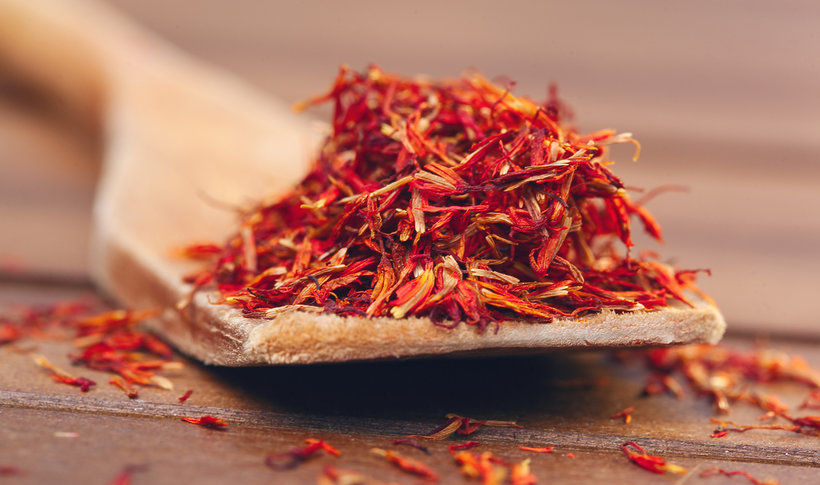
Alcoholic Safran Solution
Safran de Getinais (6.0 g)
Absolute alcohol (100 mL)
(Keep tightly closed to prevent hydration)
Staining Procedure
1. Deparaffinize and hydrate in DI H2O
2. Stain in Alcian blue for 20 minutes
3. Wash in running tap water for 5 minutes
4. Place slides in Alkaline alcohol for exactly 1 hour
5. Wash in running tap water for 10 minutes
6. Rinse in DI H2O
7. Stain in Hematoxylin solution for 12 to 15 minutes
8. Rinse in several changes of DI H2O
9. Differentiate carefully, each individual slide, by dipping 2 or 3 times in 2% aqueous ferric chloride; rinse in DI H2O and check under microscope
10. Place slides in sodium thiosulfate for 1 minutes
11. Wash in running tap water for 5 minutes; rinse in DI H2O
12. Stain in crocein scarlet-acid fuchsin for 1 to 3 minutes, depending on desired redness
13. Rinse in several changes of DI H2O
14. Rinse in .5% acetic acid water
15. Place slides in 5% aqueous phosphotungstic acid, 2 chages of 5 minutes each
16. Rinse in .5% acetic acid water
17. Rinse in 3 changes absolute alcohol
18. Stain in safran for 15 minutes
19. Rinse in 3 changes of fresh absolute alcohol and 2 changes of Xylene and mount in mounting medium
Results
Nuclei and elastic fibers – black
Collagen and reticular fibers – yellow
Ground substance, mucin – blue
Fibrinoid, fibrin intense – red
Muscle – red
Remarks
Differentiation of the elastica is usually accomplished quickly and is complete when the elastic fibers remain black and the background becomes relatively clear. Most sections contain blood vessels, and the elastica within them is easily identified and helpful in differentiation. A control section (e.g. skin) should be included each time the stain is performed. The complete removal of alkaline alcohol with running water (Step #5 of staining procedure) is important. Failure to remove all alkaline alcohol will inhibit the stains that follow.

Rib cut transversely. MOVAT staining. Mouse 8 days old. Fixative: Bouin. Paraplast coupe 4µm.

Mouse 8 days old. Fixative: Bouin. Paraplastcoupe 4µm. Detail of previous image. 1. Lung; 2. Nerves transversely and longitudinally cut; 3. Vertebrae; 4. Red bone marrow with blood cell formation; 5. Blood vessel; 6. Muscle tissue. MOVAT staining.
I hope that the above methodology will be useful soon and you will be able to use it in your daily work. For those who will be looking for specific variants of this stain, I invite you to the website, where you will find a little more methodology in the knowledge ((beta) tab. Remember that the database is being created, so it is not fully developed yet, and although the procedures should be correct, they may contain errors, until we check everything thoroughly, you can find the password on Facebook Lab Path Experts.
In the meantime, do not overeat too much or, let your stomachs be bottomless :)
Source:
1) Russell, H.K.: A modification of the Movat pentachrome stain. Arch Pathol, 94: 187, 1972.
2) Movat, HZ (1955). "Demonstration of all connective tissue elements in a single section; pentachrome stains". AMA Archives of Pathology. 60 (3): 289–95.
3) Garvey W., et. al., (1986), Improved Movat pentachrome stain Stain Technology, V. 61, No 1, pp 60-62
-------------------------------------------
Dziś tłusty czwartek, dzień kojarzony w czasach starozytnych z końcem zimy i nadejściem wiosny na terenach centralnej europy. Jedzenie tłustych potraw, czy pączków skojarzyło mi się głównie z miażdzycą, a ta z kolei z barwieniami dotyczącymi naczyń, a więc jak tłusty czwartek to i na bogato. Dlatego postanowiłem połączyć obydwie te rzeczy i zająć się dziś jednym z najdroższych barwień histochemicznych, które jednocześnie związane jest z układem naczyniowym. Wielu z Was mogłoby pomyśleć, że najdroższa jest impregnacja jonami srebra, która w metodyce posiada bardzo drogi chlorek złota, niemniej jednak na dzień dzisiejszy wszelkie zestawy raczej pomijają ten krok, tracąc odrobinę na jakości, ale jednocześnie znacznie obniżając cenę. Zestaw ten do wybarwienia 100 testów potrafi kosztować ponad 400 Euro co, jak na barwienie histochemiczne, jest ceną bardzo wysoką.
Movat’s Pentachrome jest trudnym do wykonania barwieniem, niemniej jednak uzyskiwane obrazy niejednokrotnie mogłyby posłużyć za dzieła sztuki głównie ze względu na feerię barw. Oryginalne barwienie zostało wynalezione przez Henry’ego Zoltana Movata, węgiersko-kanadyjskiego uczonego, w roku 1955 roku. Głównym celem tego barwienia jest rozróżnienie tkanki łącznej od naczyniowej.
W chwili obecnej mamy do dyspozycji 3 warianty tego barwienia:
Silverman-Movat
Garvey-Movat
Russel-Movat
z czego ten ostatni jest najbardziej popularny.
Dziś przedstawię właśnie tę najpopularniejszą (pozostałe wersje będą dziś dostępna na stronie labpathexperts.com) czyli Russel-Movat’s Pentachrome.

Jacobson's organ. Cartilage green/blue.MOVAT staining.Mouse 8 days old. Fixative: Bouin. Paraplast coupe 4µm
Utrwalenie
10% buforowana neutralna formalina lub utrwalacz Karnovsky'ego
Technika
Skrawki parafinowe 5-6 mikronów
Roztwory do barwienia
1% roztwór błękitu Alcian
• błękit alcjanowy, 8 GS (1,0 g)
• woda destylowana (100,0 ml)
• lodowaty kwas octowy (1,0 ml)
Kwaśny Alkohol
• Wodorotlenek amonu (10,0 ml)
• Alkohol, 95% (90 ml)
Roztwór hematoksyliny
• Czysta hematoksylina alkoholowa, 5% (50 ml)
• Chlorek żelazowy, 10% wodny (25,0 ml)
• Jodyna (25,0 ml)
◦ Jod (2,0 g)
◦ Jodek potasu (4,0 g)
◦ Woda destylowana (100 ml)
Tiosiarczan sodu
• tiosiarczan sodu (5,0 g)
• woda destylowana (100 ml)
Crocein Scarlet (roztwór podstawowy)
• Crocein scarlet (0,1 g)
• Woda destylowana (99,5 ml)
• lodowaty kwas octowy (0,5 ml)
Kwaśna fuksyna (roztwór podstawowy)
Kwas fuksyna (0,1 g)
Woda destylowana (99,5 ml)
Kwas octowy lodowaty (0,5 ml)
Crocein Scarlet - Acid Fuchsin (roztwór roboczy)
Wymieszać 8 części roztworu podstawowego Crocein Scarlet z 2 częściami roztworu podstawowego kwaśnej fuksyny
Alkoholowy roztwór szafranu
Safran de Getinais (szafran) (6,0 g)
Alkohol absolutny (100 ml)
(Przechowywać szczelnie zamknięte, aby zapobiec uwodnieniu)
Procedura barwienia
1. Odparafinować i uwodnić w destylowanej H2O
2. Barwić błękitem alcjanu przez 20 minut
3. Płukać pod bieżącą wodą przez 5 minut
4. Umieścić szkiełka w kwaśnym alkoholu dokładnie na 1 godzinę
5. Płukać pod bieżącą wodą przez 10 minut
6. Wypłucz w estylowanej H2O
7. Barwić w roztworze hematoksyliny przez 12 do 15 minut
8. Wypłucz kilkoma zmianami destylowanej H2O
9. Starannie różmocpwać szkiełka pojedynczo, zanurzając je 2 lub 3 razy w 2% wodnym roztworze chlorku żelazowego; wypłucz w destylowanej H2O i sprawdź pod mikroskopem
10. Umieścić szkiełka w tiosiarczanie sodu na 1 minutę
11. Płukać pod bieżącą wodą przez 5 minut; wypłukać w destylowanej H2O
12. Barwić w corcein scarlet-kwaśna fuksyna przez 1 do 3 minut, w zależności od pożądanego zaczerwienienia
13. Płucz kilkoma zmianami destylowanej H2O
14. Wypłukać w wodzie z kwasem octowym 5%
15. Umieścić szkiełka w 5% wodnym roztworze kwasu fosforowolframowego, 2 zmiany po 5 minut każda
16. Wypłukać w wodzie z kwasem octowym 5%
17. Płukać w 3 zmianach absolutnego alkoholu
18. Barwić w roztworze alkoholowym szafranu przez 15 minut
19. Wypłucz w 3 zmianach świeżego alkoholu absolutnego i 2 zmianach ksylenu, zaklej
Wyniki
Jądra i włókna elastyczne - czarne
Włókna kolagenowe i siateczkowe - żółte
Podłoże, mucyny - niebieskie
Fibryny - czerwony
Mięśnie - czerwone
Uwagi
Różnicowanie włókien zwykle następuje szybko i jest całkowite, gdy włókna elastyczne stają się czarne, a tło stosunkowo czyste. Większość przekrojów zawiera naczynia krwionośne, a włókna kolagenowe i siateczkowe w nichzawarte są łatwe do zidentyfikowania i pomocna w rozróżnianiu. Za każdym razem, gdy wykonywane jest barwienie, należy dołączyć kontrolę (np. skórę). Ważne jest całkowite usunięcie alkoholu alkalicznego pod bieżącą wodą (etap 5 procedury barwienia). Nieusunięcie wszystkich alkoholi alkalicznych zahamuje barwienie.
Rib cut transversely. MOVAT staining. Mouse 8 days old. Fixative: Bouin. Paraplast coupe 4µm.
Mouse 8 days old. Fixative: Bouin. Paraplastcoupe 4µm. Detail of previous image. 1. Lung; 2. Nerves transversely and longitudinally cut; 3. Vertebrae; 4. Red bone marrow with blood cell formation; 5. Blood vessel; 6. Muscle tissue. MOVAT staining.
Mam nadzieję, że powyższa metodologia przyda się w niedługim czasie i będziecie mogli ją wykorzystać w codziennej pracy. Dla tych, którzy będą poszukiwali specyficznych wariantów tego barwienia, zapraszam na stronę internetowa, gdzie znajdziecie w zakładce knowledge( (beta) trochę więcej metodologii. Pamiętajcie, że baza jest tworzona, a więc nie jest jeszcze w pełni dopracowana, a procedury choć powinny być poprawne, mogą zawierać jeszcze błędy, do momentu w którym nie sprawdzimy wszystkiego dokładnie. Hasło dostępu znajdziecie na Facebooku Lab Path Experts.
A tymczasem, nie objadajcie się za bardzo, albo żeby Wasze żołądki były bez dna :)
Źródła:
1) Russell, H.K.: A modification of the Movat pentachrome stain. Arch Pathol, 94: 187, 1972.
2) Movat, HZ (1955). "Demonstration of all connective tissue elements in a single section; pentachrome stains". AMA Archives of Pathology. 60 (3): 289–95.
3) Garvey W., et. al., (1986), Improved Movat pentachrome stain Stain Technology, V. 61, No 1, pp 60-62


Comments